
NEWS — 72
LAMANG SECURES INDEPENDENCE FROM BRITISH RULE
NEWSPAPER
FRONT -
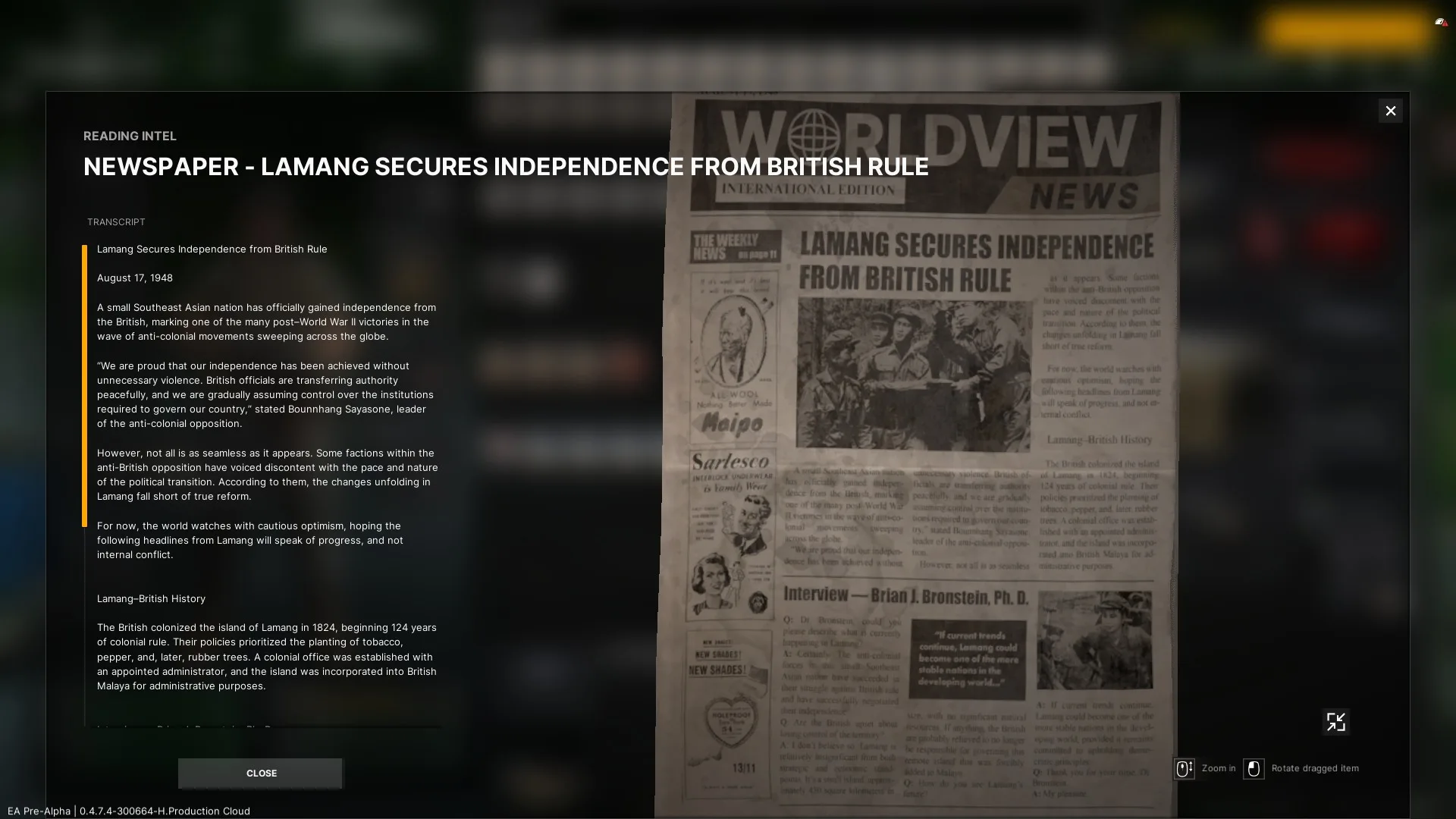
Lamang Secures Independence from British Rule
August 17, 1948
A small Southeast Asian nation has officially gained independence from the British, marking one of the many post-World War II victories in the wave of anti-colonial movements sweeping across the globe.
"We are proud that our independence has been achieved without unnecessary violence. British officials are transferring authority peacefully, and we are gradually assuming control over the institutions required to govern our country," stated Bounnhang Sayasone, leader of the anti-colonial opposition.
However, not all is as seamless as it appears. Some factions within the anti-British opposition have voiced discontent with the pace and nature of the political transition. According to them, the changes unfolding in Lamang fall short of true reform.
For now, the world watches with cautious optimism, hoping the following headlines from Lamang will speak of progress, and not internal conflict.
Lamang-British History
The British colonized the island of Lamang in 1824, beginning 124 years of colonial rule. Their policies prioritized the planting of tobacco,
pepper, and, later, rubber trees. A colonial office was established with
an appointed administrator, and the island was incorporated into British Malaya for administrative purposes.
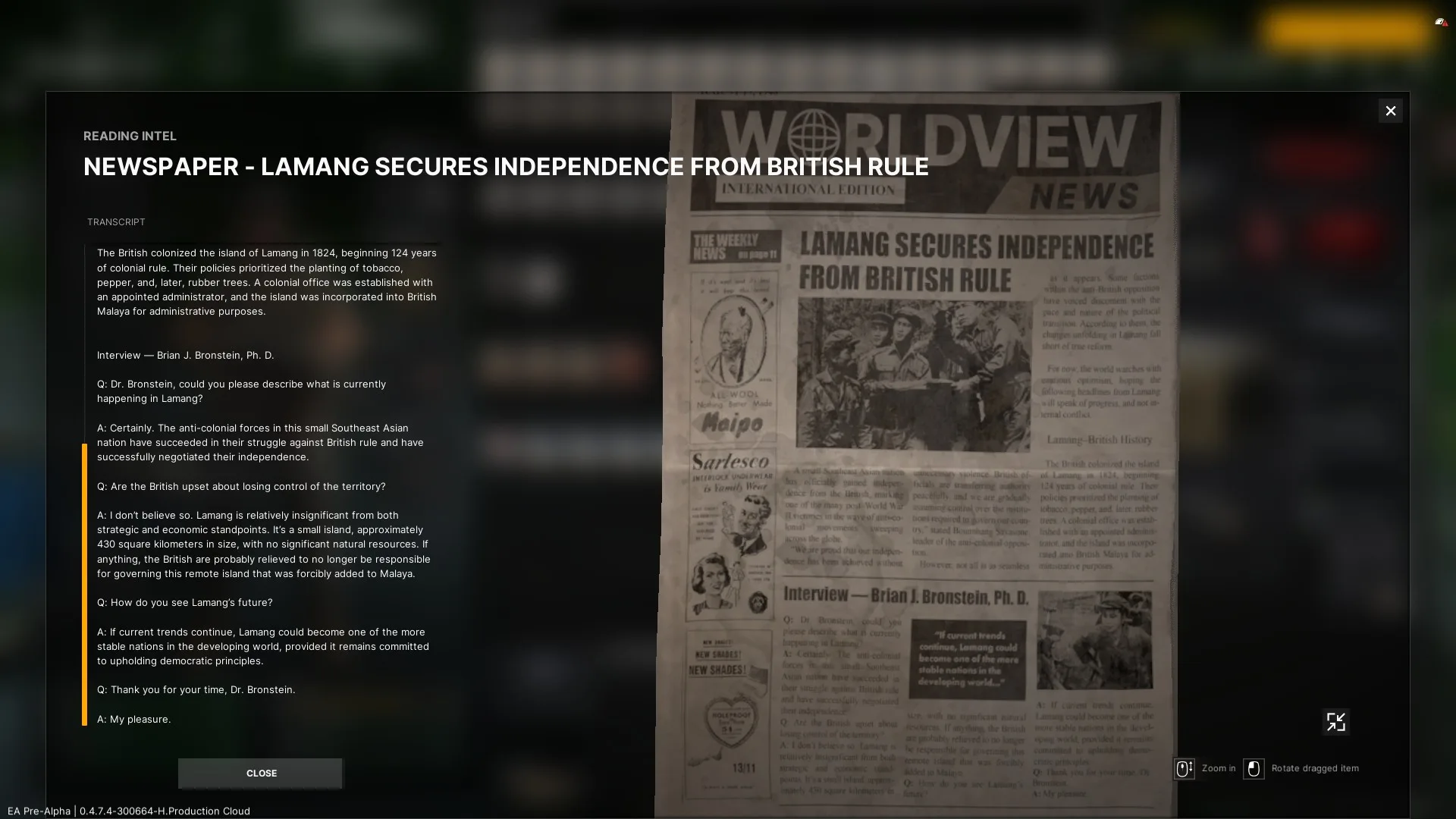
Interview - Brian J. Bronstein, Ph. D.
Q: Dr. Bronstein, could you please describe what is currently happening in Lamang?
A: Certainly. The anti-colonial forces in this small Southeast Asian nation have succeeded in their struggle against British rule and have successfully negotiated their independence.
Q: Are the British upset about losing control of the territory?
A: I don't believe so. Lamang is relatively insignificant from both strategic and economic standpoints. It's a small island, approximately 430 square kilometers in size, with no significant natural resources. If anything, the British are probably relieved to no longer be responsible for governing this remote island that was forcibly added to Malaya.
Q: How do you see Lamang's future?
A: If current trends continue, Lamang could become one of the more stable nations in the developing world, provided it remains committed to upholding democratic principles.
Q: Thank you for your time, Dr. Bronstein.
A: My pleasure.
--------------------------
REVERSE -
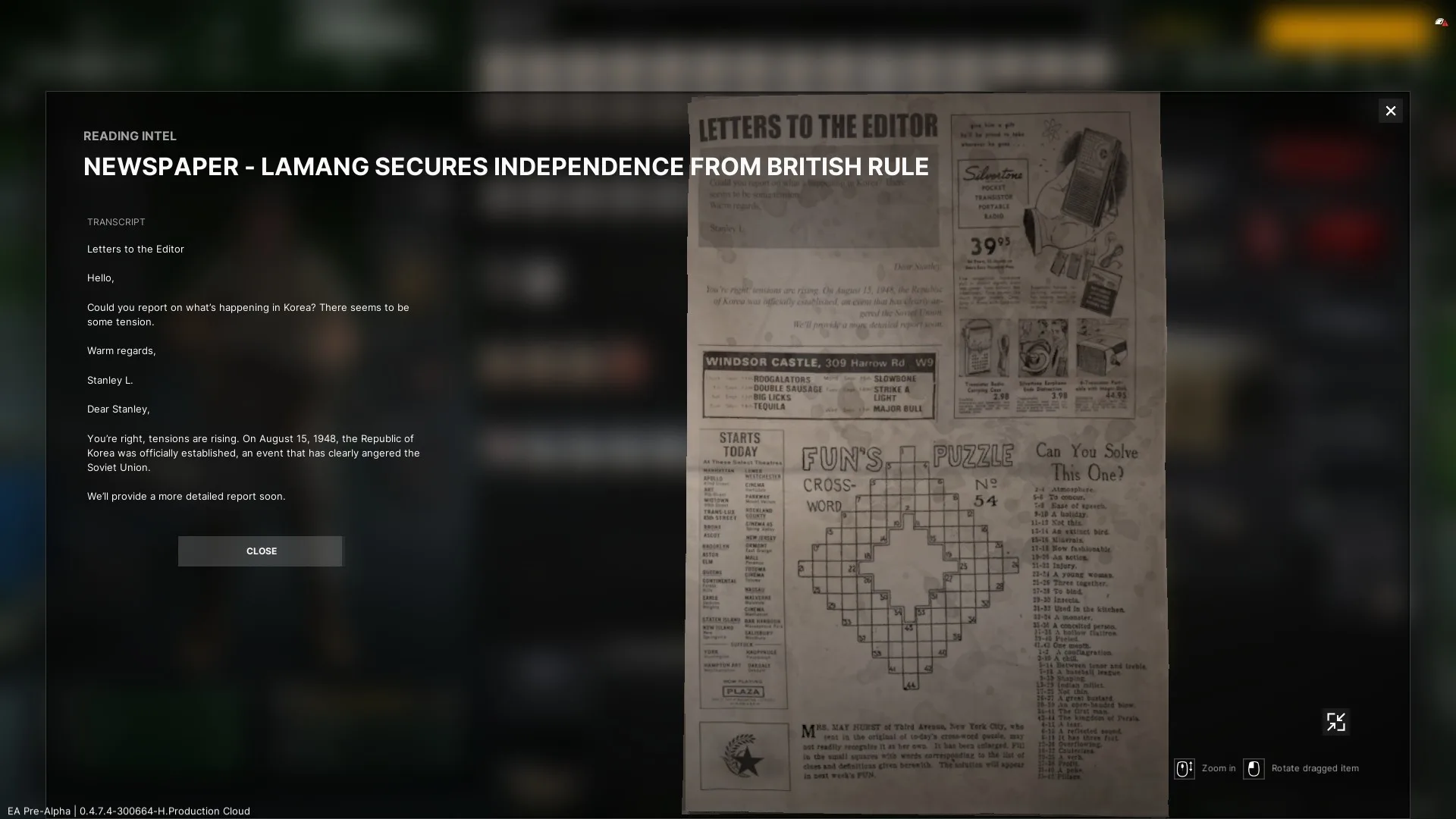
Letters to the Editor
Hello,
Could you report on what's happening in Korea? There seems to be some tension.
Warm regards,
Stanley L.
Dear Stanley,
You're right, tensions are rising. On August 15, 1948, the Republic of Korea was officially established, an event that has clearly angered the Soviet Union.
We'll provide a more detailed report soon.
Comments
0